
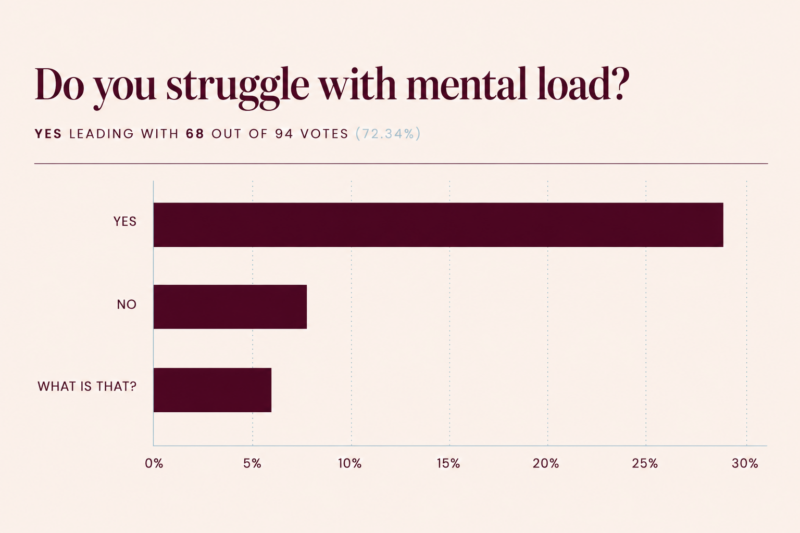
Nearly 73% of Scoop readers—who are largely women—report struggling with mental load, according to a June poll.
- And 68% said the cognitive load (appointments, logistics) takes up more brain space than emotional labor.
- Though as one person put it: “I mean, I picked cognitive, but we’re basically splitting hairs here. It’s definitely BOTH.”
Defined & explained: Mental load is the invisible stress created by the demands of the world; it’s the constant list running in your head, Brooke Osterhoudt (my personal therapist of many years) says.
- While emotional labor is more about care taking for the emotional experience of others—I’m worried about my friend’s breakup, I wonder if my son is making friends at school?
- Depending on how many people you’re running that checklist for, it really adds up, she says.
One person said: “I carry the mental load for my whole family, and I don’t get a break or even acknowledgement of everything I do. That hurts a lot sometimes.”
- And in hetero relationships, this experience is common, Brooke says. She sees it multiple times every day.
- There’s research to back that up that’s sometimes referred to as the second shift, she tells me.
- Essentially, when women entered the workforce full-time, their caretaking and homemaking duties never changed.
How to fix it: Step one might be talking to your partner—and it’s not about complaining. Brooke recommends a “soft opening” like this:
- “Hey, I’ve been hearing all of this research about mental load and I’m looking to audit our systems to create more simplicity. Can we take a look at that?”
Then you divide and conquer in a way that leans into ease and natural abilities.
- Outsourcing things like meal prep or laundry can be massively helpful for daily stressors, if possible.
To further simplify: Think about where you want to be creative, where you’re creating pressure and how you actually want to live. Dinner, gifts, appointments and activities are what Brooke hears about most often.
- Dinner: It doesn’t need to be fancy. Maybe you have seven meals in rotation that you cook together and you have that set grocery list delivered every week from Walmart, Costco, etc.
- Gifts: Keep a gift drawer or closet stocked with easy teacher gifts, bday parties, hosting gifts, etc.
- Activities: Carpool! Take turns with other friends or other parents.
- Appointments, chores, routines: Consider a Skylight calendar so you can move the list out of your brain; put it into a to-do list and then divide those tasks across family members.
Bottom line: It’s not selfish to include yourself when considering the needs of the household, Brooke says.
- Always audit to create more space and freedom, she adds. Ah-ha moments and creativity come through the quiet; if you’re constantly running the list, you’re not getting that.