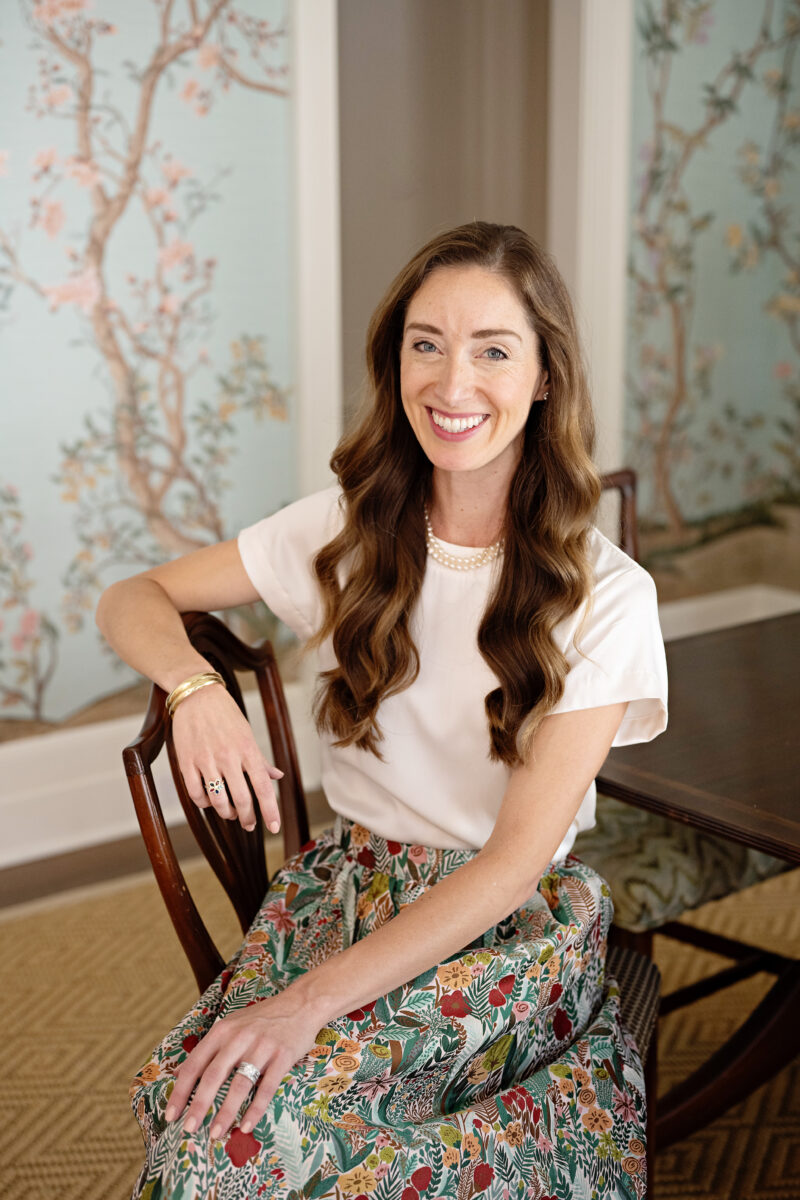
For this installment of 20 Questions, I had the chance to chat with Elizabeth Anne Russell, the founder of Mannerly.
- She’s a third-generation etiquette instructor and started her own etiquette school company after 16 years in the corporate world.
We dove into manners at work, parties and a number of other best practices. Here’s a glimpse at our illuminating conversation.
Can we start by defining modern manners? What does being well-mannered mean?
Modern manners are not about memorizing rules or appearing perfect. Hallelujah. It is about helping others feel seen, respected, and valued through our behavior.
- It is welcoming others to your conversation circle and always making room for one more at your table.
- Being well-mannered means balancing confidence in yourself with consideration for others.
What’s something that’s misunderstood about modern etiquette?
Many people assume etiquette is outdated or focused on rigid rules.
- In reality, modern etiquette is simply the practical skill of navigating relationships, conversations, and social situations with awareness and kindness – and I love to back up our teaching with social science.
- There is so much research around why these skills and tools matter.
What’s one old-school rule that never goes out of style?
Gratitude. Whether spoken, written, or sent digitally, expressing gratitude remains one of the most powerful ways to strengthen relationships and show respect.
- And especially the art of a handwritten note.
- No one is going to pin your email to their wall, but handwritten notes are lasting tokens of gratitude.
Is there an old-school rule that’s no longer in play?
Many etiquette rules were tied to strict formality. Today, etiquette is less about following arbitrary traditions and more about understanding the purpose behind a behavior and adapting it to modern life.
If you had to grade Charlotte on its manners, how are we doing as a community?
I love Charlotte and it is such a welcoming city. We are community-minded and willing to help others.
- Like many growing cities, the opportunity lies in slowing down and bringing more presence and attentiveness to our daily interactions.
- When you are more aware and know the etiquette guidance it can make everyday interactions more enjoyable so that you can focus on the people you are with.
What are we good at & where can we improve?
We are excellent at welcoming others.
- We can improve by being more present—putting away distractions (phones, devices), listening more intentionally, and creating deeper connections in a world that tells us to hurry.
What’s the biggest and/or most common dinner party foul?
Bringing your phone to the table. Even a phone face down on the table is still a distraction. A dinner party is ultimately about connection, and anything that competes with your attention takes away from the present moment.
What makes someone a good guest?
A good guest is thoughtful and easy to host. They contribute positively to the atmosphere – bring good conversation and positive energy and share gratitude at the end of the event.
What about a gracious host?
A gracious host prioritizes people over perfection.Guests will rarely remember your centerpiece or menu, but they will remember how you made them feel while they were in your home.
- A gracious host helps guests feel welcome and comfortable – and makes the evening fun.
When should we send a physical note or card? Is a text ever OK?
A text is perfectly appropriate for many everyday expressions of thanks. Also if you open a gift in front of someone and can share thanks in person – a handwritten note is not required.
- However, gifts, acts of generosity, condolences, celebrations, interviews, and milestone moments deserve the added thoughtfulness of a handwritten note.
- There are moments when time is important – such as interviews, where you need to send an email thank you note vs a handwritten note to ensure it arrives in time.
How can we be better conversationalists?
Focus less on being interesting and more on being interested. Be CURIOUS. Ask thoughtful questions, listen actively, and look for ways to make the other person feel heard and understood. Also read TALK by Alison Wood Brooks.
Do you have specific tips for introverts?
Absolutely. Because – hi, it’s me. Great conversation is not about being the loudest person in the room. Introverts often excel because they are deep thinkers – they listen carefully, ask meaningful questions, and create space for others to share. Your thoughtfulness can be an advantage in conversation.
Is there such a thing as social media etiquette?
Absolutely. Social media etiquette is simply applying respect and consideration online. Give credit, engage thoughtfully, avoid impulsive reactions. Never say anything online you wouldn’t say directly to someone in person.
How can we make manners approachable for kids?
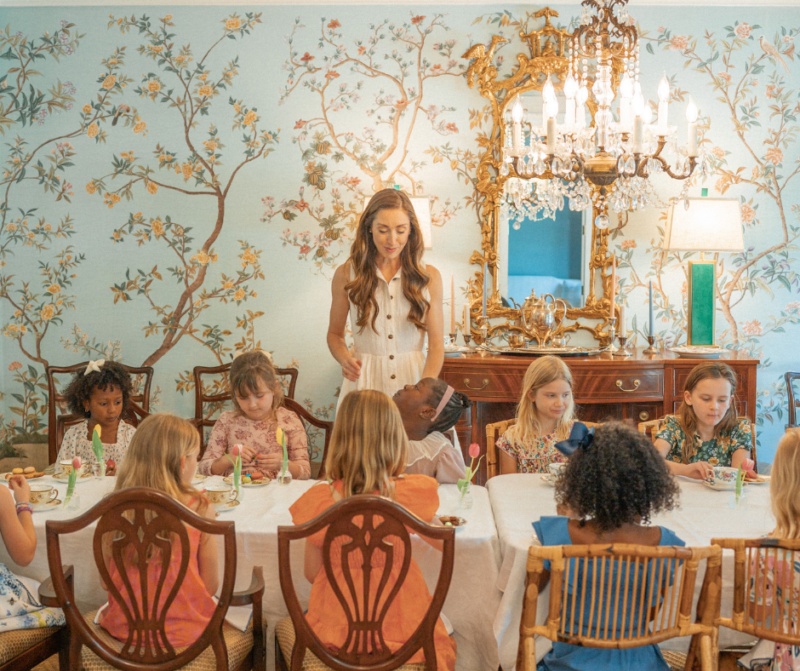
Join one of our Mannerly classes for children ages 5 to 8th grade!
- Children learn best through modeling, practice, and encouragement—and we love our group settings for this.
- When we frame manners as a way to help others feel included, respected, and cared for, children quickly understand their purpose.
Let’s talk about manners at work. How can leaders show up with more grace?
Great leaders make people feel valued. They listen well, communicate clearly, give credit generously, and create environments where people feel respected, trusted, and heard.
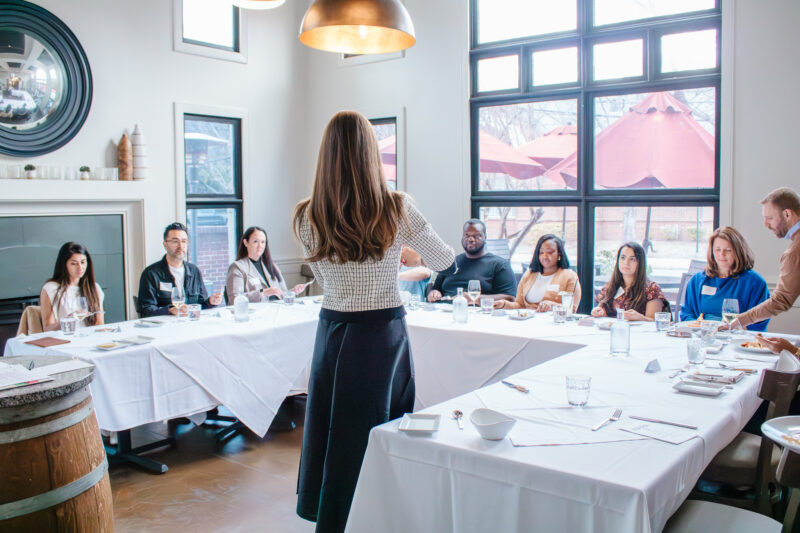
- Hire us for our next team training!
- We love working with large and small companies across so many industries to walk through our professional presence training which combines the latest behavioral science research and modern etiquette in the workplace to open more opportunities for success.
How can more junior professionals create a good impression?
Drop behavior that makes you look less experienced. Be reliable. Respond promptly, arrive prepared, follow through on commitments, and treat every interaction—from emails to meetings—with professionalism and respect.
- Work dinners should feel like work – come prepared with thoughtful questions at the table and be engaging/engaged with others.
Do poor manners hold us back from our own potential?
YES. Technical skills may open doors, but interpersonal skills often determine the quality of our relationships, opportunities, and long-term success. How we make others feel matters.
- There are many studies that support this including from Harvard, Carnegie Foundation and Stanford which indicate that 85% of our success is attributable to our interpersonal skill set – which is modern etiquette.
Even if there isn’t a hyper-specific dress code, is there an art to getting dressed in a mannerly fashion? How does our physical appearance relate to etiquette?
Dress the way you wish to be addressed. Appearance is ultimately a form of communication.
- Dressing appropriately for the occasion demonstrates respect for the people around us, while also helping us feel more confident and prepared.
- Also what you wear influences how you think and behave. It truly matters.
Talk to me about the relationship between manners & confidence. Is there a link?
Yes. Etiquette provides a framework for navigating social situations, which reduces uncertainty and increases confidence.
- When we know how to introduce ourselves, join a conversation, or navigate a dinner table, we can focus on connecting rather than worrying.
- Etiquette is our map when situations are ambiguous.
Anything else we should know?
The heart of modern etiquette is simple: confidence and consideration. In an increasingly digital world, the ability to make others feel seen, respected, and valued may be one of the most important skills we can develop.
Bonus: If you like EA’s approach, I have good news for you! She’s writing a book that will be published by Penguin Random House – pre orders will open March 2027.
- Mannerly will be a guide to modern etiquette combining timeless tradition with contemporary research in psychology and behavioral science redefining etiquette as a way of living rather than a rigid set of rules.
Love learning from experts? Me too. That’s where this 20 Questions series started—a genuine curiosity to learn from female leaders in Charlotte. Catch up here.