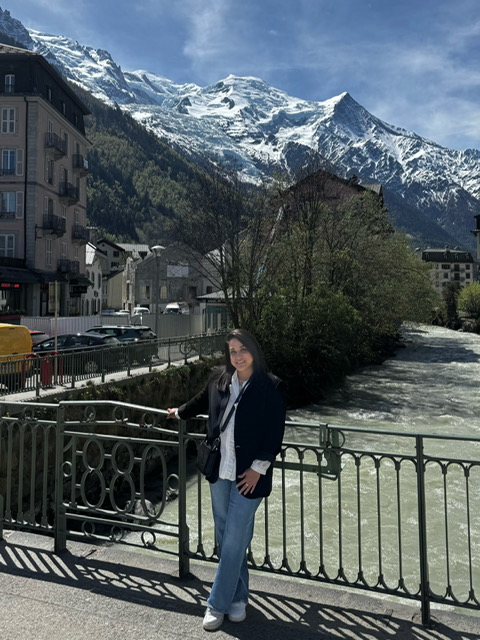
You ever sit down with someone so inspiring you have to hold back from asking 100 questions? That’s how I felt getting lunch with Nesha Pai this week.
- Nesha is a CPA and public speaker. She founded her fully remote accounting firm back in 2011 and specializes in working with small businesses and solo entrepreneurs.
Our conversation ping-ponged from building a business to AI to scarcity mindset, and I drank up every single second.
- So I figured it deserved to be the debut installment of 20 questions, a series where I pick the brains of Charlotte’s leading experts.
Without further ado, here’s a look at my convo with Nesha.
How did this all start?
I walked out on a boss who told me I wasn’t worthy of the raise that I was asking for because I had a “mom gap” in my resume.
Wait, what’s a mom gap?
A mom gap is the time a woman takes off to raise her children. So because I had taken six years out of my career to raise my son, he was telling me, you’re not where your peers are right now. You have taken that time off. So I walked out that day and I took that one big client with me.
Nice.
Yeah. I started as a single-mom, 40 years old, with an 11-year-old son.
I’m obsessed with that story in Charlotte. I feel like there are a lot of women here who hit their stride in their 2nd or 3rd career. Do you see that?
Yes, I do. Women think that it’s over for them in their 40s and 50s. I’m like, it’s just beginning. You’re building up to your next evolution, right? And so that’s truly, truly how I feel.
Where are women in their life when they come to see you?
What I’m noticing is women approach me when they feel stuck. They feel like I don’t know how to get to that next move, just very stuck.
Do you think men experience that?
I think they feel stuck, but they’ll never voice it. And I think that, naturally, what we’re seeing is women want more for their lives. They want more purpose. Like, how can they continue to impact the communities, the world, other people’s lives? I think that’s what women really want.
Talk about some inflection points for your business.
I was actually one of the first business models in Charlotte in 2011 to run a fully remote, virtual bookkeeping firm. Interesting. And the reason I did that is because I couldn’t afford rent. And then 2020 actually made my firm. I doubled my revenue.
Do you think being a mom or becoming a mom changed your perspective at work? Or do you see it change other women’s perspectives?
I think the perspective is, yes, we want to show our children that we can have it all and do it all. It may not be all at once. But it’s kind of like showing our children that we can be more than just a mom, that we’re multi-dimensional.
It might change our goals, maybe we don’t want to climb the corporate ladder. I didn’t know I wanted to do this on my own, at the time, but ironically it led me to freedom.
Tell me about that freedom.
I battled breast cancer in 2024, two months after my baby sister died suddenly in a heart attack. She was 45.
- My whole point of mentioning that is, had I not built this incredible team and documented all the processes and procedures and established my business, I couldn’t have stepped away.
- I stepped away most of 2024. Cancer was my full-time job, and grieving and helping my parents with it all.
- I try to teach people to build a business you can step away from, and 2024 was my biggest test of that, of how stable my business was, so far.
Do you see women having hang ups about being good with money, or being conditioned to believe they aren’t?
Yes, part of my mission is educating women to take control of their finances and make their own money.
- Even if you’re married, keep a little separate bank account, know your passwords, know where your money and assets are.
- Because we see too many times women who unexpectedly get divorced, or unexpectedly their spouse dies, and they have no idea about the money. And then they’re crippled. It’s heartbreaking.
How often is that happening, do you think?
Higher than 50% of the time. I think our generation is changing now, because I see a lot more women taking control.
What are Charlotte businesswomen really good at?
They love what they do & they have a passion for it. That in and of itself is what motivates and drives them to get up every day, giving it their best.
- I think Charlotte women are innovative thinkers, and they put themselves out there, through social media or otherwise.
Where do we have room to improve?
Taking control of the finances or at least understanding them. There’s such a fear of even looking.
When did you start feeling successful?
I started feeling successful probably in year five because by year five, 50% of businesses fail.
- I started getting a positive reputation here and now I’m 50% here, 50% all over the country. When it started growing outside of Charlotte, that felt really cool.
How do we become better networkers?
Do one small thing every day that’s uncomfortable—go out to lunch alone, if that terrifies you. And leave with one relevant business card if you’re at an event. Someone you could have coffee with and might be able to build a relationship with.
What was your relationship to money growing up?
My dad came here on a cargo ship with a dollar in his pocket in the 60s. Both of my parents came from extreme wealth in India, and they came here with nothing. So I grew up with a scarcity mindset, and I had to really work on my mindset when I started making money.
Did you grow up in Charlotte or the South? I
I was born in East Tennessee in a town with 12,000 people and probably 5 Indian families, and then I went to NC State, and then I got to work at Arthur Anderson.
- I faced a lot of overt racism and sexism.
- Let’s call it what it is. Racism was born in the South, and it’s still prevalent, but I think Charlotte is making a lot of change.
- But yeah, I experienced a lot of that growing up. It impacted the way I felt about myself, the way I looked at myself. I felt uglier. I wanted to be blonde-haired and blue. Yeah, all of that.
Do you think Charlotte is a good city to be an entrepreneur of color?
Yes, and I’ll tell you why. I was on the board at the Charlotte Regional Business Alliance, and they run programs specifically for minority business owners. And I think it is the most amazing thing that I’ve seen in the city.
- This is only in the last 5 years, but that gave me an injection of hope here, that Charlotte is trying to do something.
Okay, so we’re behind, but we’re moving?
We’re behind but we’re moving.
What do you think you did early on that helped set you up for success?
Staying disciplined with my time, investing in technology and documenting processes and procedures—you can’t scale without those.
How are you using AI?
People are resistant to AI. But if you take it for what it’s meant to be used for, in your industry, it will change your life.
- I use AI to help me write blog posts and social. I still have to edit it, but it saves me hours.
- Also, in the accounting industry, there’s a lot of AI use in helping us analyze PNLs quicker, create KPIs, etc.
- I use it to create summaries of 100-page IRS rulings, stuff like that.
Do you have any non-negotiables for yourself as a business owner?
So I have like five core values, and I run everybody through that prism.
- So that if I partner with you, if you become a client, if you’re my friend, if you’re someone on their date, do you have the same values?
Number two. I came out of here for freedom. So I put myself first.
- So if I go to the gym, I put that in my books as an important meeting. I plan everything around the things that I need to stay well physically, mentally, spiritually.