
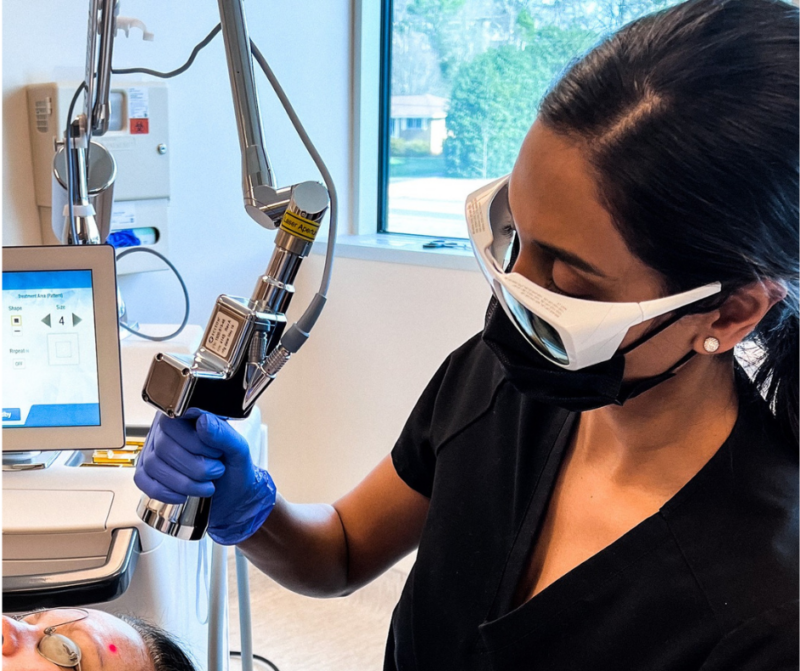
Lasers have been used in medicine for the past several decades but procedures have advanced greatly in the last 20 years—for both aesthetic and functional concerns.
- Lasers improve skin tone, laxity and wrinkles, remove hair and unwanted tattoos, and resurface scars. They can also ablate precancerous lesions.
We chatted with CEENTA facial plastic surgery specialist Dr. Neela Rao all about lasers and their place in your skincare routine.
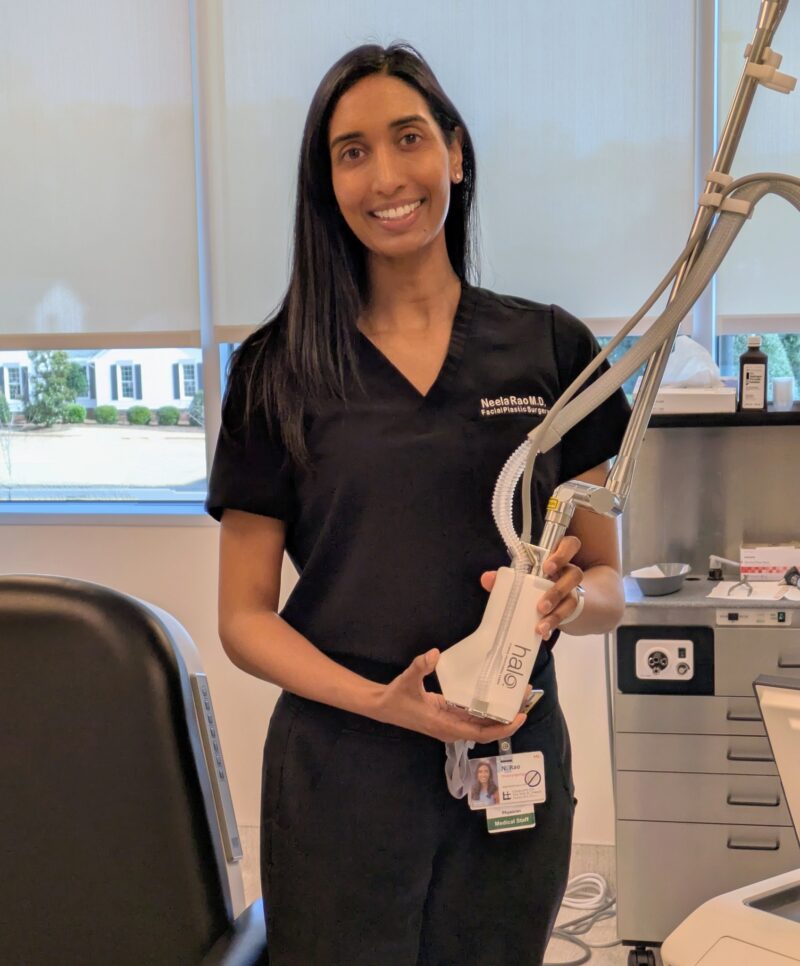
Is there a difference between getting these services done by an esthetician vs. medical professional?
There are certain services that are expertly handled by an esthetician. Any treatments that are ablative or non-fractionated should be handled by an advanced practitioner.
- It is important to have your treatments performed at a reputable facility that is following state guidelines for hygiene and safety.
- It is also essential to check the credentials of your provider and ask their experience with treating conditions like yours.
What can clients expect during the session? What does it feel like?
The laser may feel like a light rubberband snap and there may be a period of feeling heat after the treatment like a sunburn. Your provider will guide you on how to keep you comfortable.
- Sometimes a topical numbing cream is applied before the procedure or cool air is used to improve any discomfort.
- This can vary greatly depending on the procedure.
Are lasers done in multiple rounds or is it a one-time treatment?
This greatly depends on the procedure and your goals. Typically, the more intense the treatment, the greater the results and the greater the downtime.
- Lighter lasers can offer great results when performed in a series and require less downtime.
- Laser hair removal requires several sessions over months to years to target hair follicles at different stages of the growth cycle.
Is there anyone who shouldn’t be using lasers?
Lasers can be safely done on all skin types under the guidance of a board-certified practitioner. There are safe options for darker skin tones, too.
- It is important to inform your provider about any underlying skin conditions, history of cold sores, previous skin procedures or tattoos, and current use of topical products in order to keep you safe.
Talk to me about aftercare. What can/can’t you do after your treatment?
For most laser treatments, you want to avoid sun exposure and excess heat at least 2 weeks before and after the treatment.
- You also want to avoid excess sweat, retinols or deep exfoliation treatments until your skin has healed.
- Confirm with your provider if you can wear sunscreen or makeup.
What products do you recommend for aftercare?
Sunscreen and Alastin Skin Nectar (available at CEENTA Concord, Fort Mill, SouthPark, and Uptown). This will protect your skin and accelerate your recovery. Make sure you clear any products with your provider first.
Anything else we should know?
Lasers can be customized to accommodate your downtime and goals. They have been a game changer with optimizing skin health and aging gracefully. Make sure you consult with a certified provider to fully understand your options and discuss your treatment goals.
Ready to meet your best skin yet? Book your appointment here.