Around the holidays, this New York Times essay called “Why Is Shopping an Abyss of Blah?”, made its rounds. And I haven’t stopped thinking about it.
The lines that grabbed me: “In a world of abundant choice but imprisoning algorithms… Our senses are flattened, our appetites dulled.”
- “[Shopping] has become a bit like consuming champagne that’s gone flat.”
The point: “Taste is the fizz that’s missing. Because emulation is not taste.”
I ran straight to the best curators in Charlotte, Ruth Runberg and Laura Vinroot Poole to continue the conversation, and learn how to make shopping, and consumption, feel fizzy again.

“Consumerism is false,” Ruth told me.
If what you’re buying doesn’t mean something to you, you’re going to need something else again soon to keep chasing that fleeting feel-good rush.
- Spend time finding what feels like you, understanding the story behind what you’re buying—that’s going to bring enduring joy.
- You’ll start drinking from cups until they crack, and wearing your clothes until they have holes.
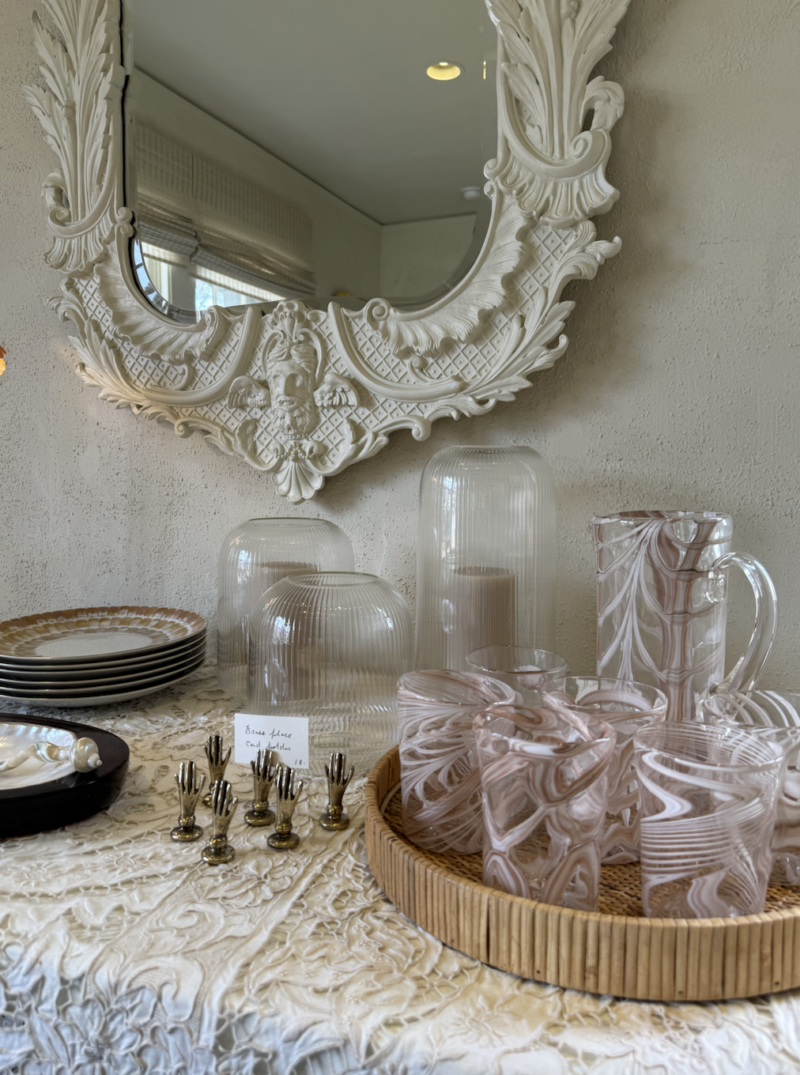
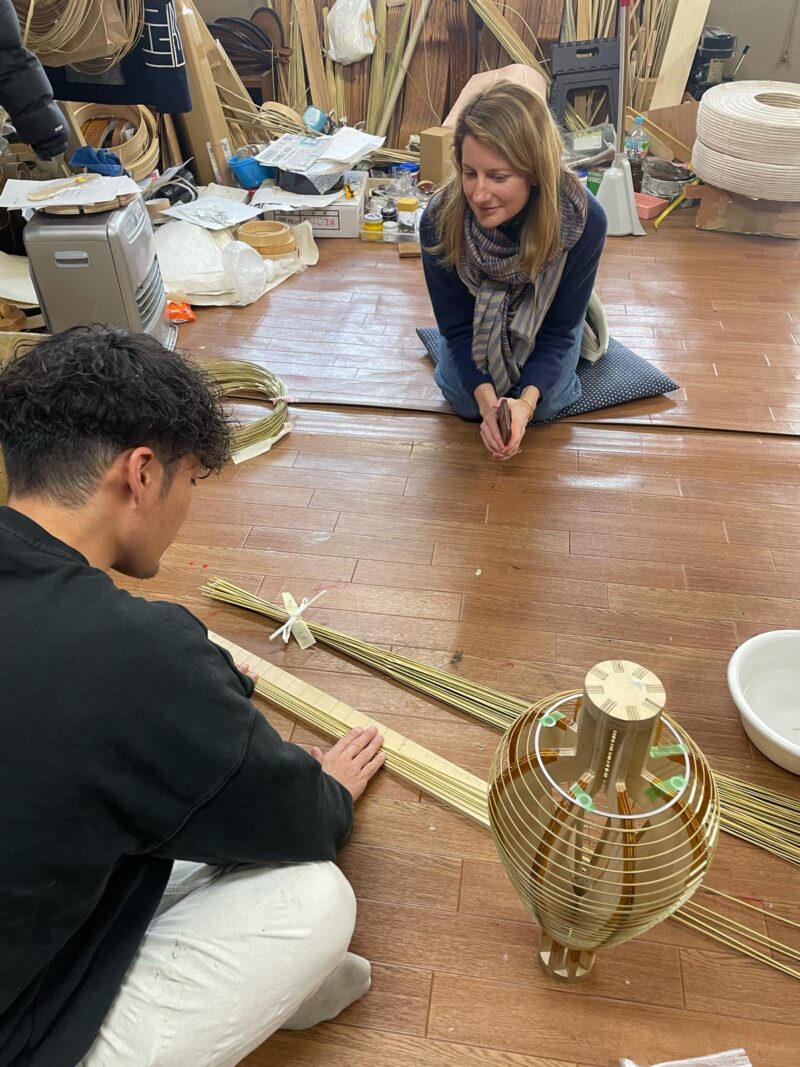
At R.Runberg Curiosities, you’re one degree away from the person who made whatever item you’re looking at.
- Ruth can tell you about the history of the craft, who made what and what it means. She travels the world making relationships with these artisans.
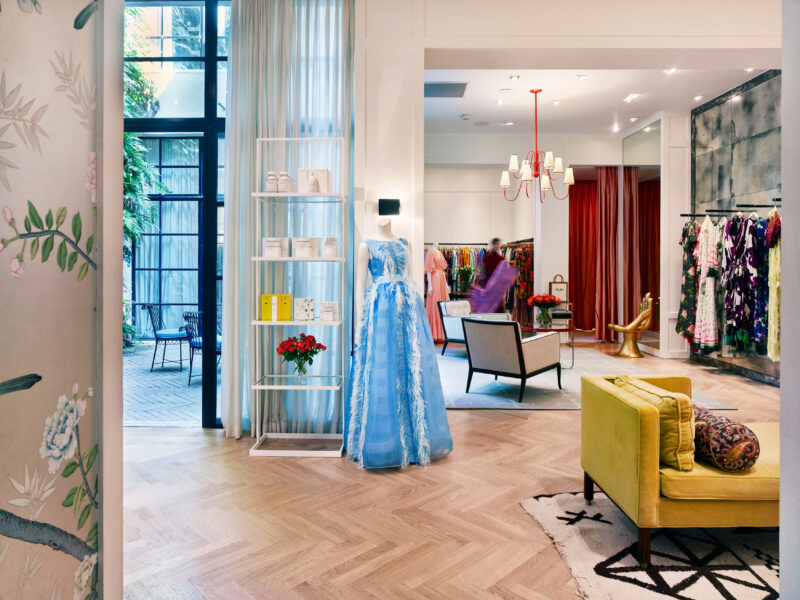
Similarly, Laura and her team touch and see every piece of clothing before it makes its way into her shops, Capitol and Poole Shop.
This has always been Laura’s way, and it’s even more important now, she says.
- Designers are being influenced by the algorithm, too.
- They’re producing for the masses, which means quality has been cut in half and prices have doubled. That doesn’t cut it at Capitol/Poole Shop.
“We have to feel the spark when we see a piece,” Laura says. “There has to be this in-person moment before we even edit it into our selection.”
- Ruth has a simple test for this, too: If it doesn’t make your heart skip a beat, then don’t get it!
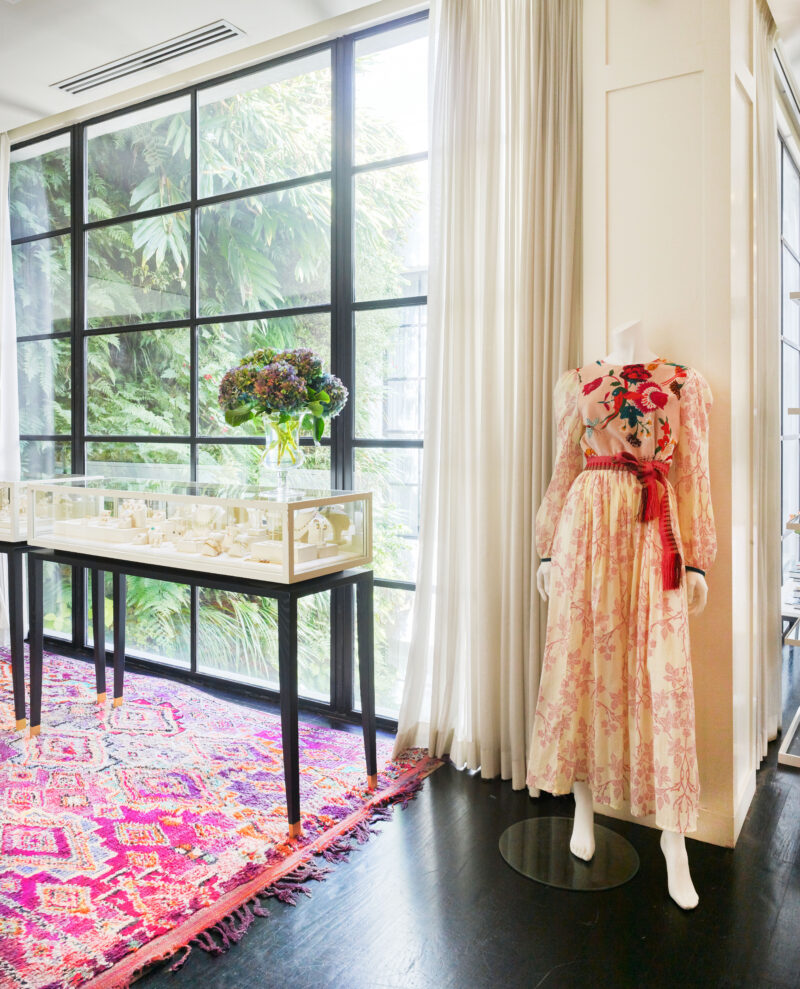
Editing is the skill that hones taste; not spending a certain amount of money or traveling the world.
Once you know what great fabrics feel like, you learn that a great Merino wool is much finer than a cashmere. You can take that knowledge to Goodwill or a thrift store, where Laura still loves to shop.
- You can apply that principle to everything from the food you eat to the furniture in your home.
“You can buy your spinach at the farmers market, where you might spend $2 more but it will taste $10 better,” Laura says. Her vintage schoolhouse dining chairs were $10 apiece, and she’s had them for decades.
It’s less wasteful excess, more solid working things that inspire a visceral “yes.” It’s shopping in person, and letting yourself go for the thing that inspires awe, depth, appreciation. Don’t accept just anything. That’s how we make our champagne sparkle again.
“It makes a difference,” Ruth says, “in how you experience the world, and how the world experiences you.”