
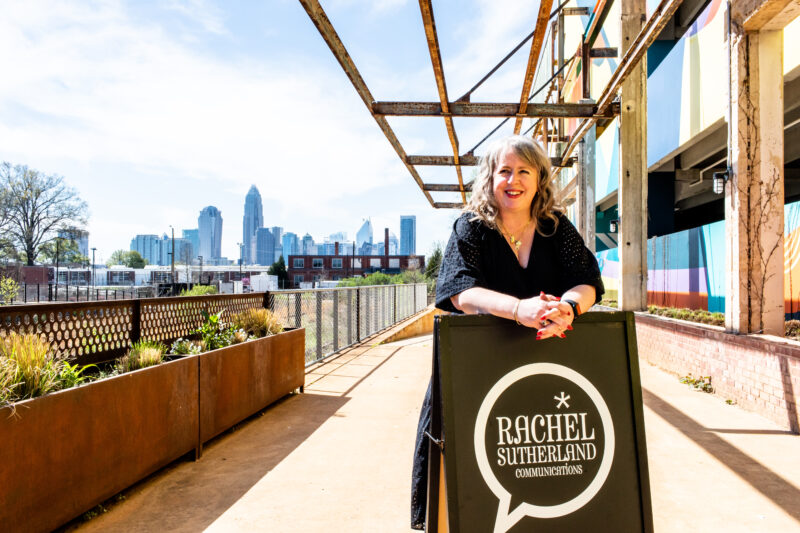
For today’s founder diaries, I caught up with Rachel Sutherland, a former journalist who left print media 16 years ago for PR—her way.
- My friend Michael Graff put out a great piece about how communication shapes our city, and that’s exactly why I wanted to talk to Rachel.
- She’s one of the city’s leading publicists, working skillfully behind the scenes to make her clients shine.
From hiring your spouse to making internet buzz look effortless, here’s what I learned from the PR pro.
How did you get into PR, and when did you go out on your own?
I moved to Charlotte in the 90s for a job at the Charlotte Observer, and I was there until 2009, and when I left I was the fashion editor.
- I took a buyout. I was part of the largest group to ever volunteer to leave the newsroom; there were about 40-ish of us.
- Storytelling was always my favorite part of the job, so PR was a natural next step.
Ironic! You mentioned as a journalist you didn’t like publicists—why not?
They were relentless. I had caller ID on my desk phone and wouldn’t answer anything with a New York area code. It felt constant and ineffective. But when I left, I took my buyout, bought a computer and a desk, and decided to try it my way. I never worked at a major agency.
What was the PR landscape like then, and what were clients coming to you for?
I had no idea what I was doing, so I started with people I knew. My first client was Jeffre Scott Apothecary—the owner is the one who nudged me into PR.
- Back then success meant TV and print, and local TV, which was just starting to build out its lifestyle shows.
When did digital really become part of the business?
It shifted with Charlotte Five and then the Agenda. Digital newsletters took over the Charlotte scene incredibly fast, and traditional media just stood there wondering what to do.
Did clients start asking for digital over print?
Honestly, most clients have never been that specific. What they want is to raise their profile in the Charlotte market, and they’re game for whatever we recommend.
When did influencers enter the equation?
It clicked when we helped open OMB’s big new facility and I realized how much people love talking about food and drinks.
- There weren’t “content creators” yet, but there were people with platforms — mostly on Twitter — we made sure came to the party.
- It’s really no different than making sure you have A-list people at any event.
- The right creator may not have the New York Times’ reach, but the reach is real.
Are people still attached to the prestige of print?
It depends on the story. Something like Tom Gabbard retiring from Blumenthal is a legacy-news story, so we wouldn’t give that to digital first.
- A restaurant opening is different; when we previewed Guard & Grace’s construction site in February, we went with Axios.
- It’s a real mix now, and part of the job is reading which outlet fits which story.
What’s the biggest misconception about PR?
That it’s glamorous and fun all the time. We joke we’re more like Emily and Andy in The Devil Wears Prada.
- It’s mostly strategy: thinking three or four steps ahead, a lot of writing, and building content calendars a month out.
When something is buzzy online, most people don’t know it’s probably very intentional—orchestrated by a PR person behind the scenes. What do you wish they understood?
Media literacy is nearly gone, and it drives me a little crazy. I wish more people understood the line between advertising and editorial. What we do isn’t gross; it’s mostly helping small businesses tell their story.
How do you balance leadership with client work?
Most of my leadership work happens after business hours.
- My husband joined about three years ago as COO and runs all the back-end — he’s a lifesaver, and my editor.
Tell me about bringing your spouse on.
He was at the Observer before I was, and got laid off in January 2010. We had two small kids and had been trading them in a parking lot between our day and night shifts, so him being home was actually the best thing that ever happened to us.
- He spent 12 years as an NFL editor at ESPN, but the grind burned him out.
- Over dinner in New York one weekend we looked at each other and said, “should you just join me?” That was it.
What does he handle?
All the things I dread—finances, HR, compliance, insurance, payroll. And he edits every single thing we put out.
Any other key hires that changed things?
My first hire, Lauren, is still with me 13 years later. Every time we add someone it’s a sign we’re growing, because I refuse to hire before there’s real work to sustain them.
- We’ve grown with intent, and staying focused matters—we don’t build websites or keep a staff photographer.
- Anything word-based, we do; for the rest, we have a great roster of contractors.
What’s your favorite part of the job?
Being curious. It’s literally my job to know everything — who’s opening, who’s moving where, what’s happening around town. I love being in the know, and this is the best excuse to stay that way.
What’s most challenging?
Growth. I know what I don’t want to become — so big that I’m not involved in the work I actually love.
- There’s real room to grow, and interestingly it’s showing up outside Charlotte, in places like Raleigh.
- I never launched with a business plan, so I don’t totally know what that looks like yet — but it’s kind of fun not to know.
You mentioned great team retention. How do you pull that off?
Autonomy. I’m a “tell me what to do and get out of my way” person, and I hire people who are the same.
Your work is reactive. How do you keep it from rattling you?
I tell my team all the time: we can’t care more than the client does.
- I don’t respond ASAP, because that only trains people to expect it.
- Everything feels urgent to me, but almost nothing actually is.
Any other tactical tips?
Schedule your sends. It’s very possible to be on 24/7, but if we do our jobs well, we can protect our weekends—it just takes planning.
- Leading a team of five, I never want a late-night email to make someone feel they have to respond, so I schedule it for the morning.
- I look very productive at 6:30 a.m., but really I queued it all the night before.