
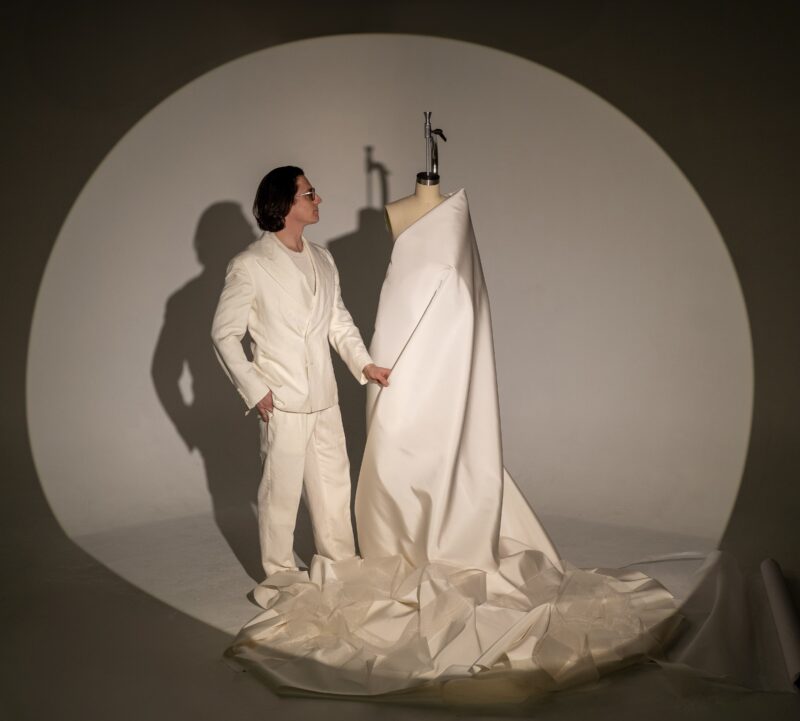
Daniel Gonzalez started taking fashion risks in middle school, and people noticed—good and bad. Some people, especially a young kid, might find that tension confusing, but it’s where Gonzalez found clarity.
That strong sense of self is crucial to his clothing design business today. Gonzalez won’t call himself a visionary, but I will, and I’m fascinated by his career path, and trajectory.
Here’s a snippet from an illuminating conversation we had on being a creative and running a business.
Tell me about your relationship with style growing up?
I’ve always dressed with a point of view, and I always liked to mix colors. I wasn’t dressing up in costume, but I always went for really stark color contrast or monochromatic looks or a fun pop of color.
So everything you’ve created is a total manifestation of that?
Oh, 100%. Everything is a reflection of a part of me, and the more I indulge that, the better the pieces are.
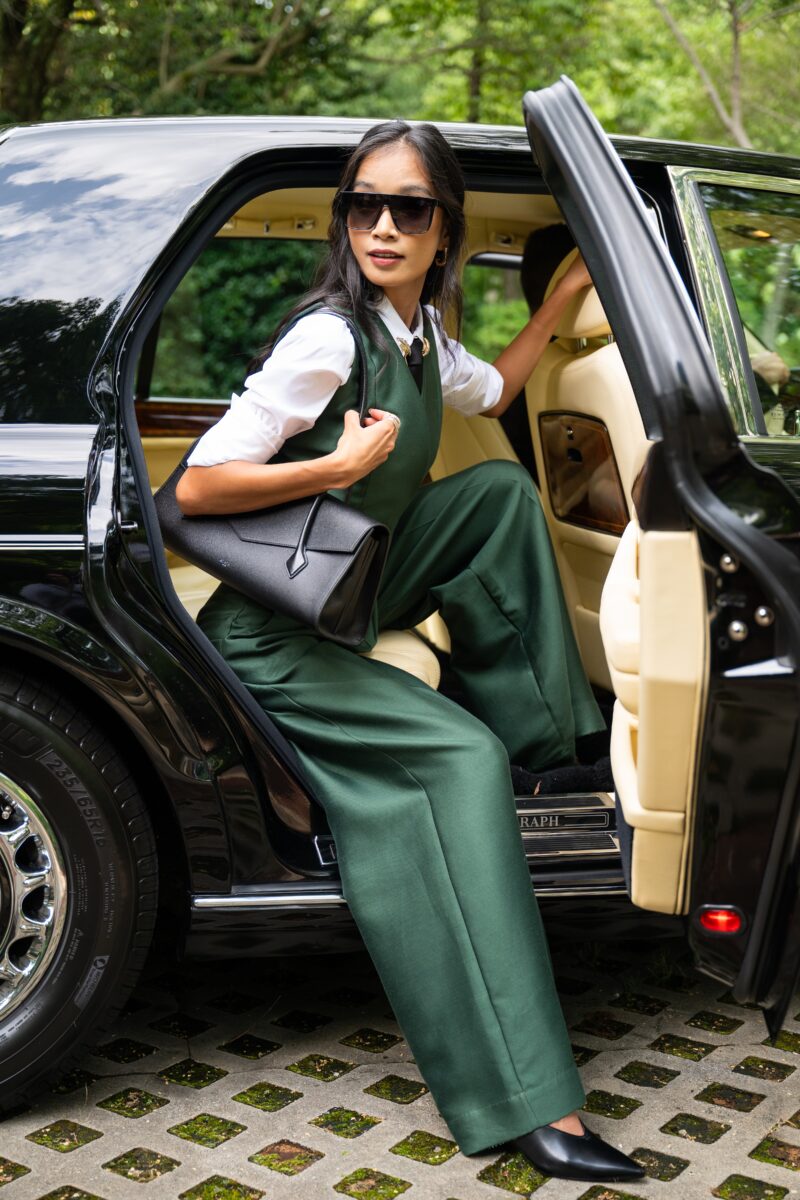
When was the first time you remember really expressing yourself through fashion? What were you wearing?
I think it was in high school. In middle school I had a rolling backpack, and I loved my rolling backpack, but I remember kids making fun of me for it. It became a whole thing.
So, in ninth grade, I was like, I’m not doing a rolling backpack. I actually got a red crossbody bag as my high school backpack.
Did you feel othered, or did you feel confident in high school? How were you feeling at that time?
I felt both. That’s one thing I’m starting to really appreciate about myself. Sometimes I felt people watching and I felt self conscious, and some people complimented it.
At the end of the day, I would feel both emotions, but I would still do it because it’s what I wanted to do. And that kind of rebellious nature has served me.
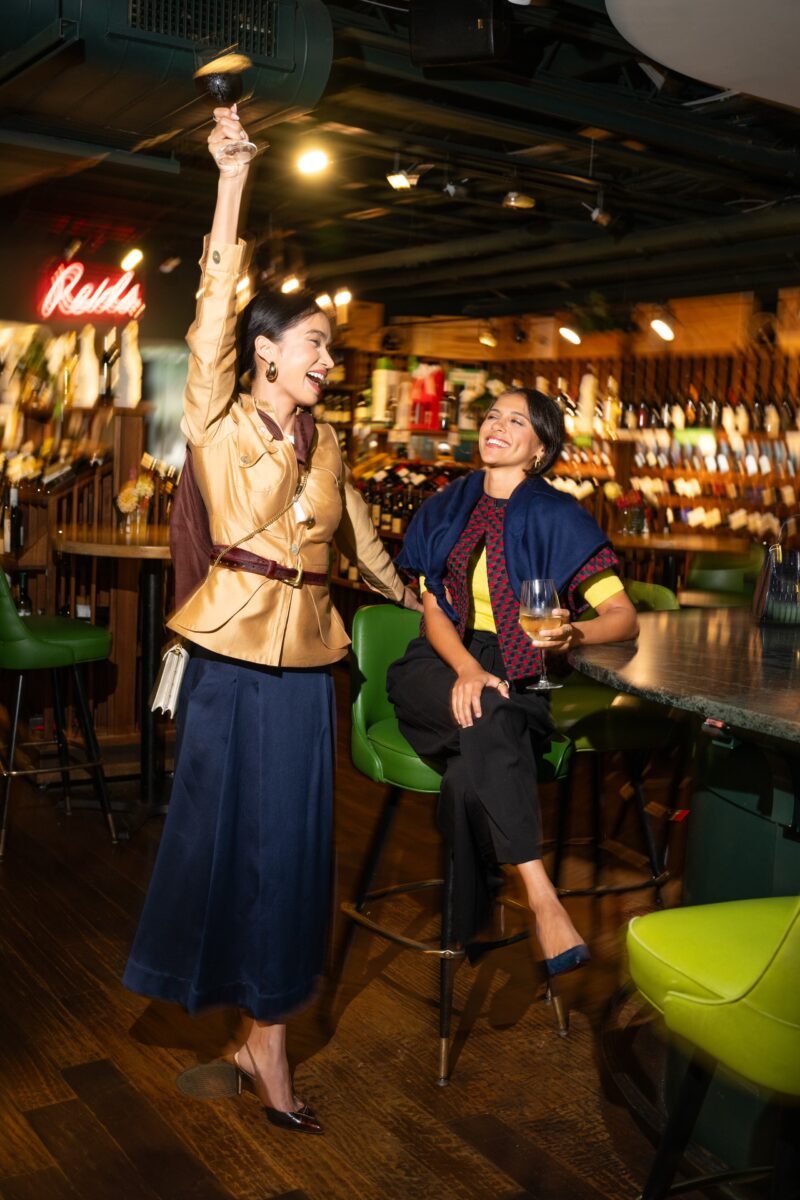
At what point did fashion become a career path for you? What set it off?
So when I was in middle school, I studied ballroom dancing. I got a dance partner, and when we started competing and traveling to Europe, we couldn’t afford brand new dresses so I made one. Our teachers loved it, and my teacher looked at me and said, “Don’t stop. You have to keep doing this.”
So, I kept dressing her, and 16 or 17 it became a full side business. It got to the point where I had to hire seamstresses to help keep up. At that point my mother looked at me and she was like “You know, I think we should explore this for you.” Fast forward to COVID, I started a made-to-measure line and this became my full-time business.
Tell me about the scope of your business right now.
Right now I’m focused on the production of our bespoke, which is fully booked until August. The other thing that we’re really working on is expanding our ready-to-wear.
This is also the first year that we’re starting to branch out to more boutiques. We’ve kept it really tight, we’ve only worked with about five boutiques for mostly pop-ups. So this year we want to expand just a tiny bit, not too much, because I don’t want to overwhelm myself or my team, or dilute our product.
How does being a creative person serve you as a business owner?
I’m never short of ideas. And having the creativity to build that world for myself allows me to make decisions so that things stay consistent and cohesive.
I know you’re very particular about sourcing. Tell me about that choice.
We get silk from China, alpaca from Peru, and cotton and leather from Colombia. I have to see, I have to touch the material, I have to touch the product, I have to look at the stitching.
How do you think about holding onto that as you scale?
I guess you can look at that from two different ways, right? We’re not at a place now where that’s an issue, meaning it’s not like we have to make 2,000 blouses. We’re not going to do that. I’m very careful of not putting out too much of the same. So that when someone buys something, they still have this sense of exclusivity.
Say we make 15 blouses. There’s only 15 in the world, which has billions of people, and you own one. That feels good, and when you wear it, you should feel a sense of individuality. That’s what we want.
What’s your philosophy on consumption and building a wardrobe? How is that reflected in your own business model?
I like a uniform look and I like clothes that are practical and functional. Everything I wear is either a wool, alpaca, silk or cotton—natural fibers. If it’s all polyester, I won’t wear it.
I brought that to my business. There are piles of trash all over the world. Why create more? I wanted to make things that are beautiful and worth keeping around for a long time.
What’s one thing we can all do to instantly feel more stylish?
Spend some time understanding what looks good on your body, and then find a really good tailor. And buy good pieces that are worth tailoring. If the cost to tailor something, one hour of labor, costs more than the blouse you just purchased, that should give people pause.
Then, take the time to understand what your style says about your personality, not what you’re trying to show, but what it says about who you are, because it’s your decision.
Anything else we should know?
We have an incredible service that we’re offering here in Charlotte. It’s designed to make people and women feel beautiful and love the art of dressing their bodies. I want people to know that that exists and we’re creating it.
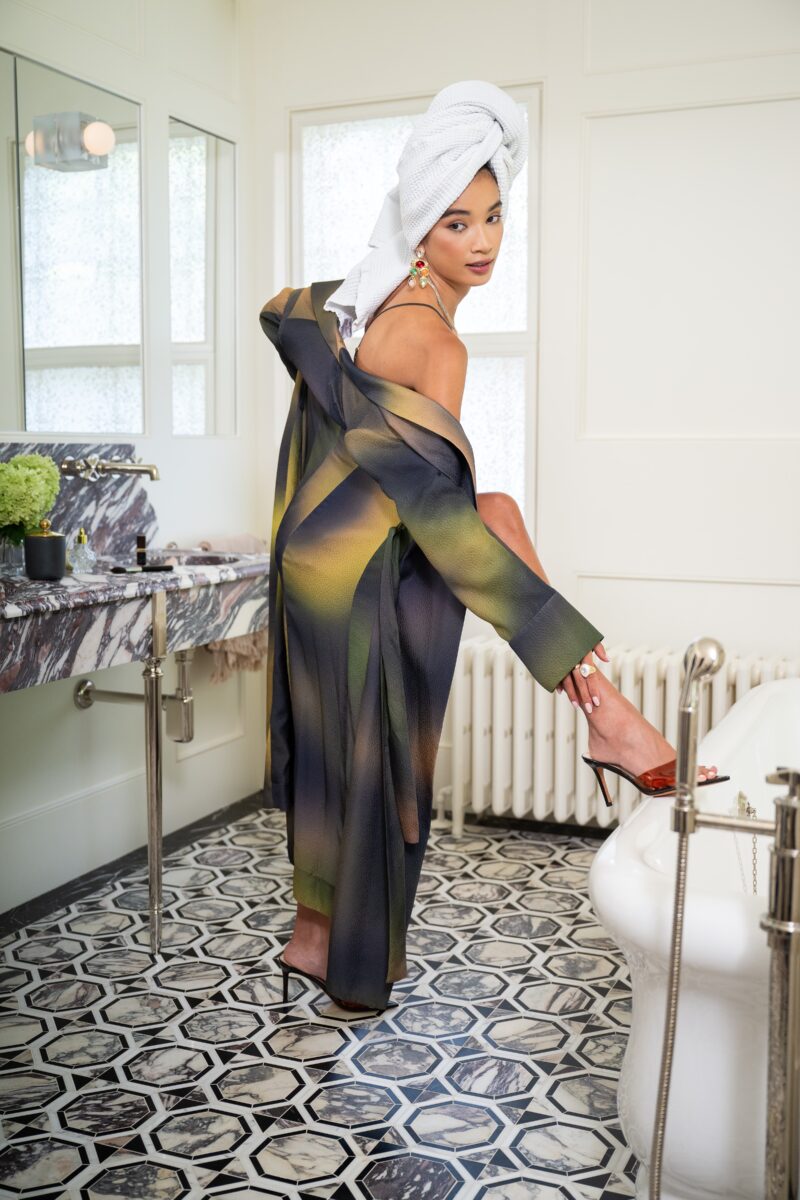
Daniel Gonzalez’s atelier is open by appointment only. Find more details here.
Who should I interview next for founder diaries? Let me know at brianna@scoopcharlotte.com.